The historic garden
Behind the discreet front façade of Beaucarne House lies an extensive park garden with numerous playful and romantic elements from 18th-, 19th- and early 20th-century landscape architecture and historic planting.
In the 19th century, the garden of Beaucarne House was described as one of the most beautiful gardens in the country.
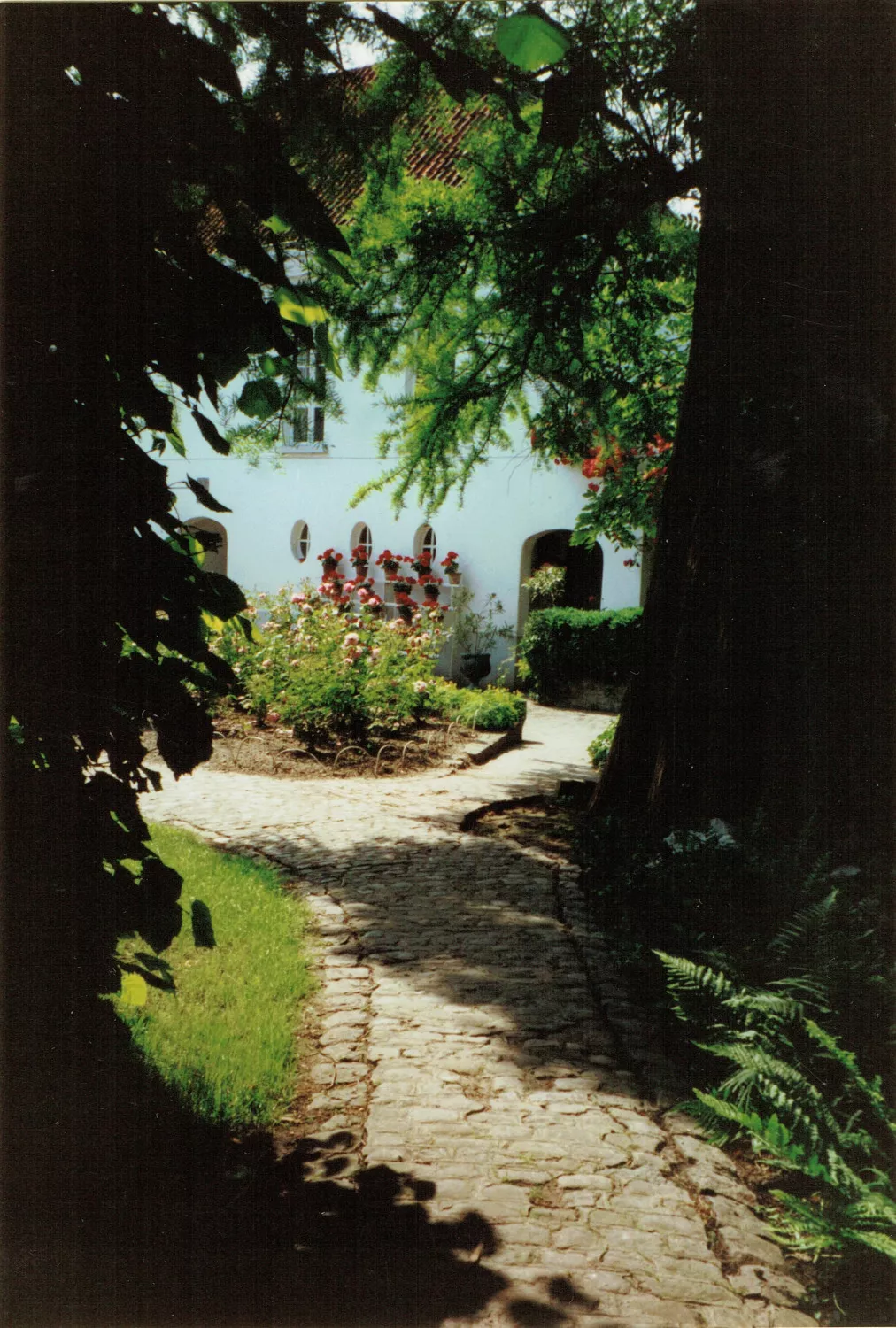
The garden begins from the inner courtyard, where images of an exotic 18th-century garden are evoked. Here you will find a large collection of Caroline Testout roses planted by the Beaucarne family after the destruction of the First World War. On the courtyard a path leads past an impressive swamp cypress that has adorned the garden since the 18th century and where a section of the 15th-century Riedekensbeek has been preserved, which once supplied water to the gardens of the Abbey of Ename. The present rock garden was added here in the early 20th century, with a water lily breeding pond as its showpiece.
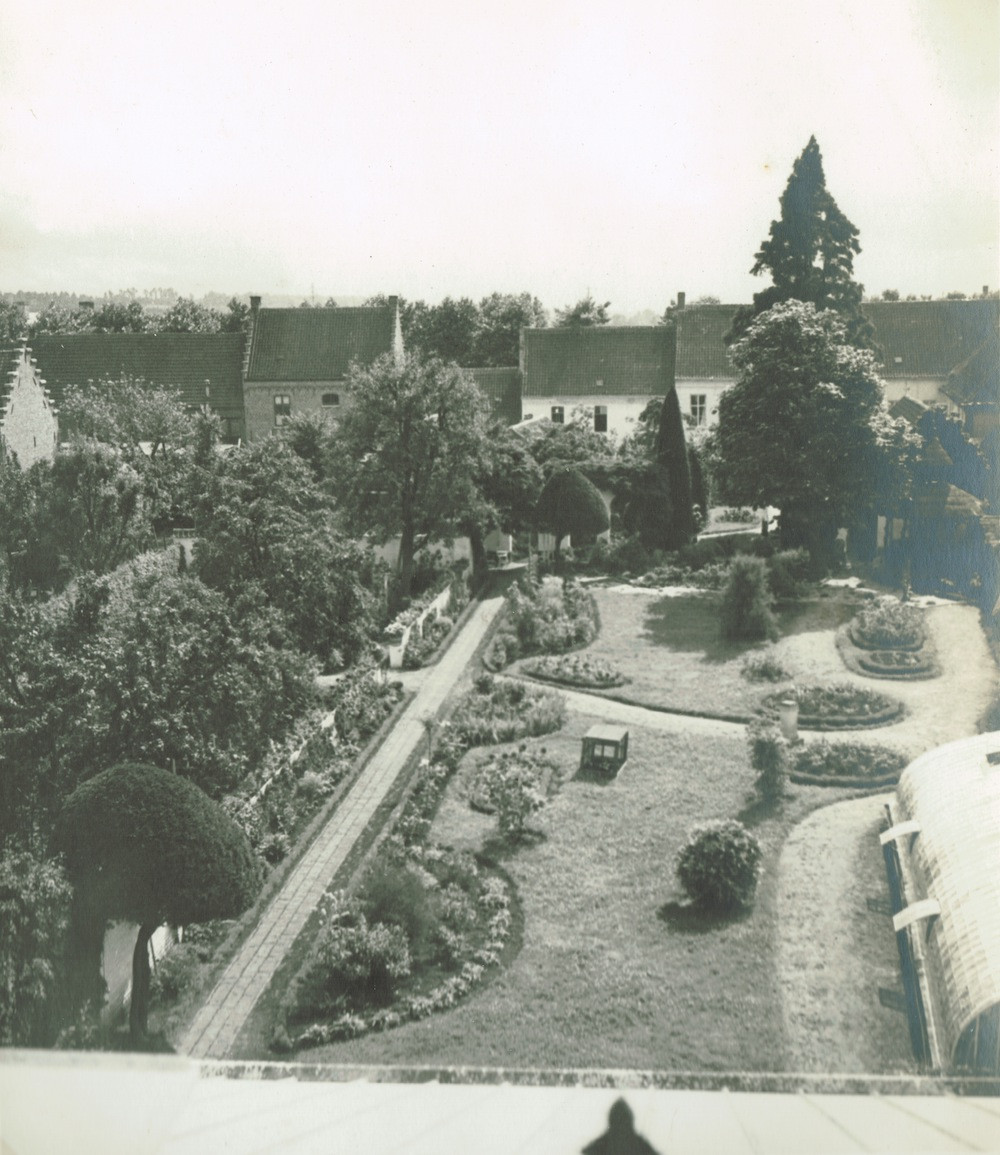
The oldest part of the garden was designed in the 18th century and drew inspiration from the local tradition of rational and strict geometric gardens inspired by 17th-century French examples. Several impressive exotic trees date from this period, including the Catalpa ovata (Belgian champion with a trunk circumference of over 500 cm!). In the 19th century, winding paths and mixed borders were added here under the influence of English Romanticism. In the 20th century a flower garden was added to the estate, alongside the already existing vegetable garden and historic orchard.
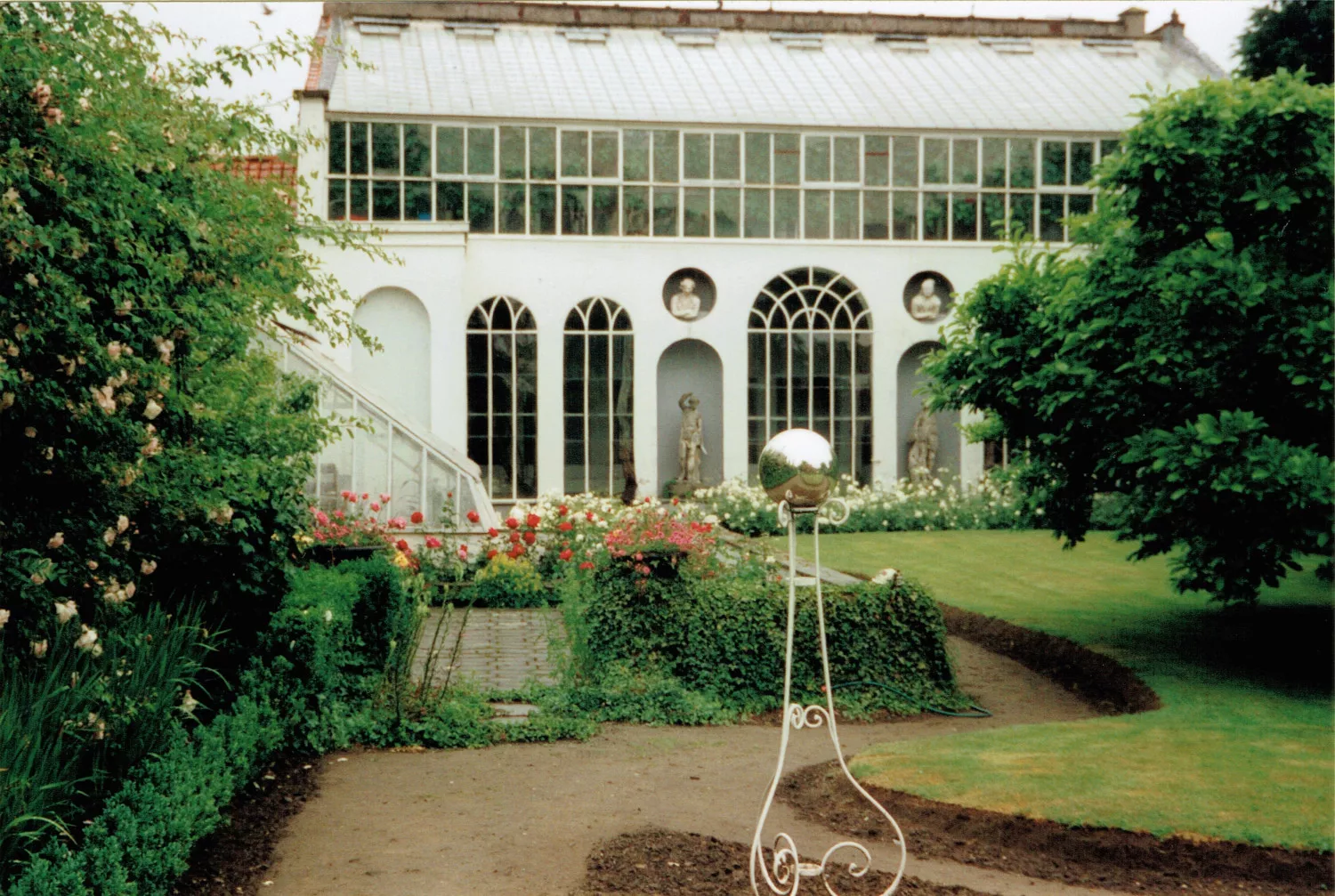
The gardens are enclosed at the rear of the estate by a monumental 18th-century grape greenhouse.
During the 18th and 19th centuries the Beaucarne family were passionate plant collectors. Several plantings from this period remain in the gardens, brought back by the family from distant journeys. A plant from Mexico was even named after them: the “Beaucarnea recurvata”.
In 2020 the Vzw Beaucarne House received the prestigious Hans Vredeman de Vries Prize for historic gardens (King Baudouin Foundation) for its efforts in recent years to manage, maintain and share the historic garden with the wider public. In 2021 the garden (and the association) was selected as the winner of the Heritage Award of the Province of East Flanders. In 2022 the swamp cypress in the courtyard was nominated as a laureate in the “Tree of the Year” competition.
The grape greenhouse
Until the early 20th century several impressive greenhouse buildings stood in the garden of Beaucarne House. Today only two remain. Next to the preserved orchid greenhouse (now converted into the Tea House), an impressive 18th-century grape greenhouse stands at the back of the garden.
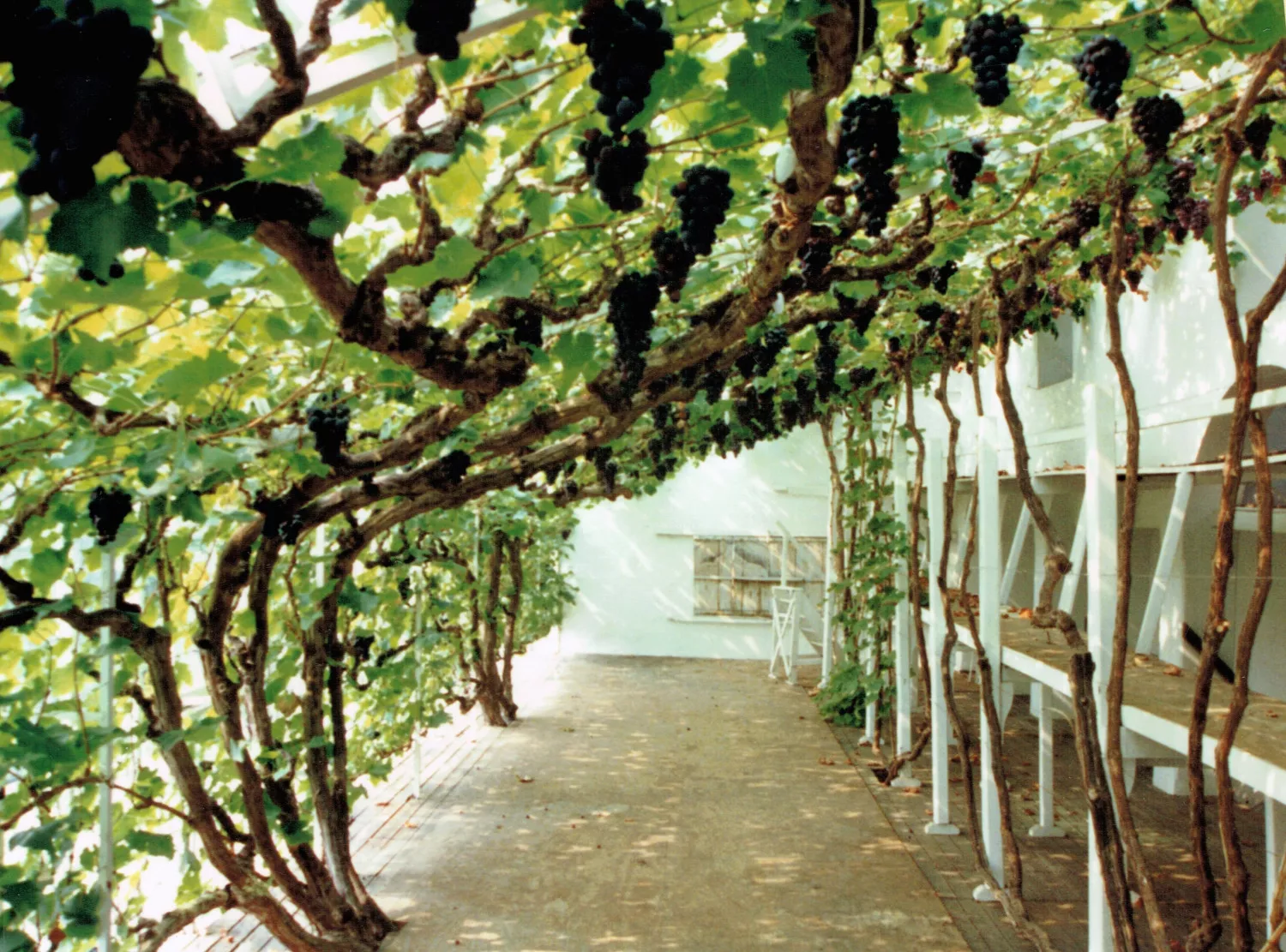
The grape greenhouse of Beaucarne House dates from the period of exoticism and was originally built in analogy with a “Turkish tent” (or “Turqueries”), with brightly coloured striped patterns on the exterior. The greenhouse now houses grapevines more than 250 years old, unique in the world. These ancient vines were originally planted alternately inside and outside the building and guided through openings in the windows to the upper level of the grape greenhouse, where they still blossom and produce delicious Frankenthal table grapes.
These vines date from the 18th century and are therefore among the very few grapevines that survived the European phylloxera epidemic of the 19th century.
Due to restoration works the grape greenhouse is currently only partially accessible to the public, both for guided tours and for film or photo shoots. Our goal is to make this remarkable building fully accessible again in the future. The current works are expected to be completed by the summer of 2025.
Help us restore this unique monument and contribute to the future of Beaucarne House!
Support us with your contribution to this important restoration project.